Showing posts with label beneficial. Show all posts

Saturday, 7 March 2015

Introducing the 'blue bullet'!

On Saturdays I finish work earlier and have a bit of extra time before it gets dark, to see how the garden is faring. Today I took the camera out, because I happened to notice between car and house that my new Grevillea Dorothy Gordon has its first flower! How exciting... it's a new release and I can't resist Grevilleas in the pink/purple colour range, especially when they promise a long flowering season! It's so great to see one in real life, and loaded with nectar too. Worth every cent, don't you think?


One job done, I went to explore the back native garden which is coming along nicely after removal of a rampant Kennedia nigricans (lovely but too big for my space) that had swamped a few of the smaller plants. There are a couple of empty patches of ground now, and I'd noticed when weeding a few weeks ago that there were heaps of white curl grubs in the soil. They eat roots you see, so most people know them as lawn grubs, who munch the roots of plants or grass below the ground until the plant gives up and simply dies. If your lawn is affected, it can simply roll up like carpet once the roots are all eaten.


 The culprits are larvae of the pest African Black Beetle Heteronychus arator, who is often attracted to backyards with solar lights or security lights on during the night. They congregate around the lights, and lay their eggs in your garden, lawn or plant pots.
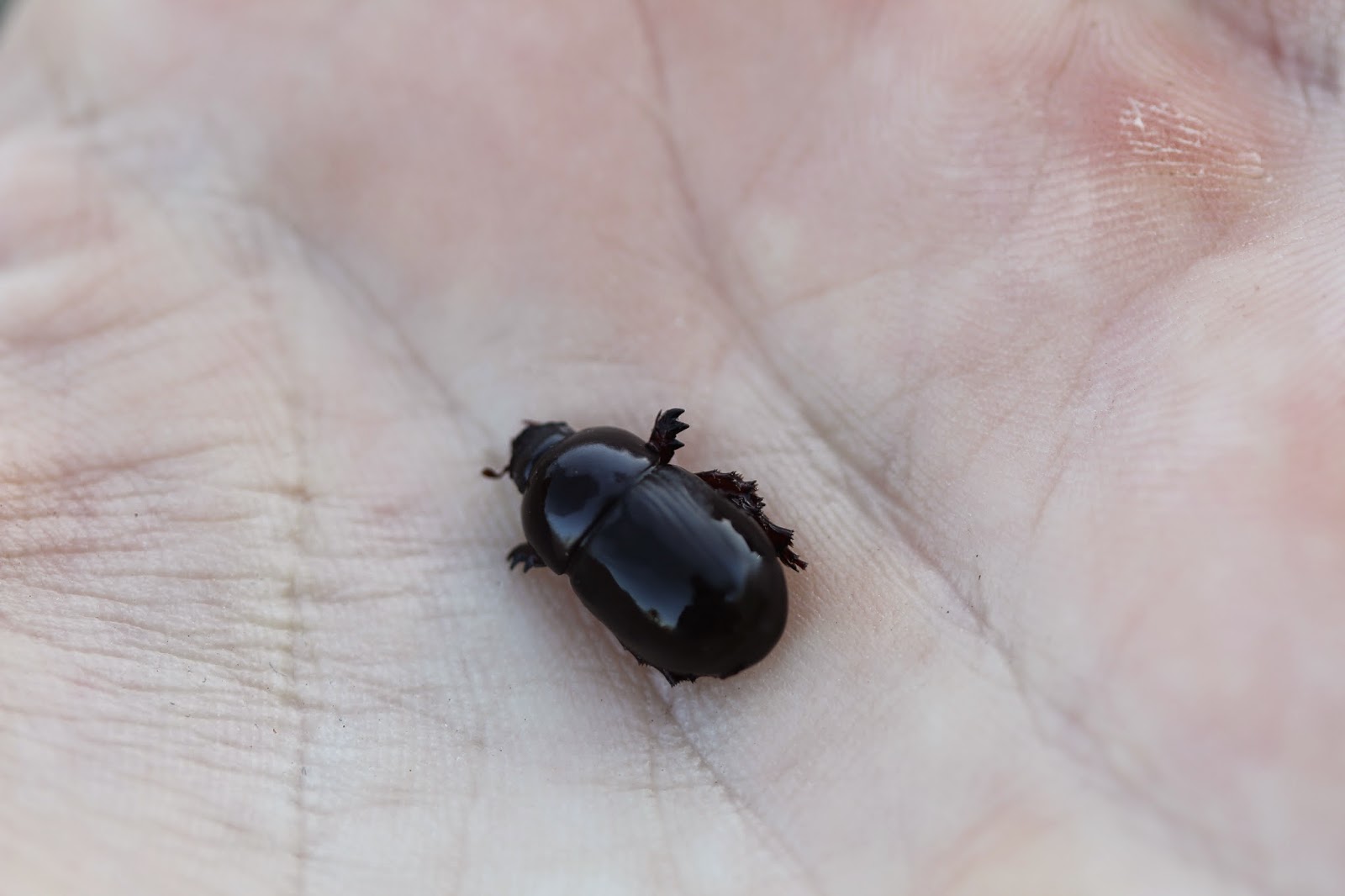
 
I was really excited this afternoon to have my exploring interrupted by a huge black insect with shiny blue wings flying at me- enter the Black Flower Wasp, Discolia soror! At work we used to call these Blue Bullets, which describes their size, shape and colour pretty well.


They seem oblivious to humans and fly around you unafraid and at great speed, eventually landing on the ground. If you're lucky, like I was...you might see her start digging in empty patches of ground, and come up a minute or so later. The beautiful part is, she's hunting for curl grubs to lay her eggs on, so her babies will eat them for me. As the saying goes... my enemy's enemy is my friend...


This is the first time I've seen one here, and I'm hoping it's because of the flowering natives I've planted for the birds and bees to feed on (these  native wasps feed on nectar as adults and are also useful pollinators). Hopefully as my garden grows I'll attract plenty more so I don't have to use any nasty lawn grub chemicals!

As an extra nerdy treat, I also saw this wasp which I think is the male Hairy Yellow Flower Wasp Campsomeris sp, resting on my lemon grass. It performs a similar function, but I haven't seen them before at all. Will have to do some more research, the biodiversity  here is increasing all the time!


Monday, 28 July 2014

Photo of the week - friends in the garden

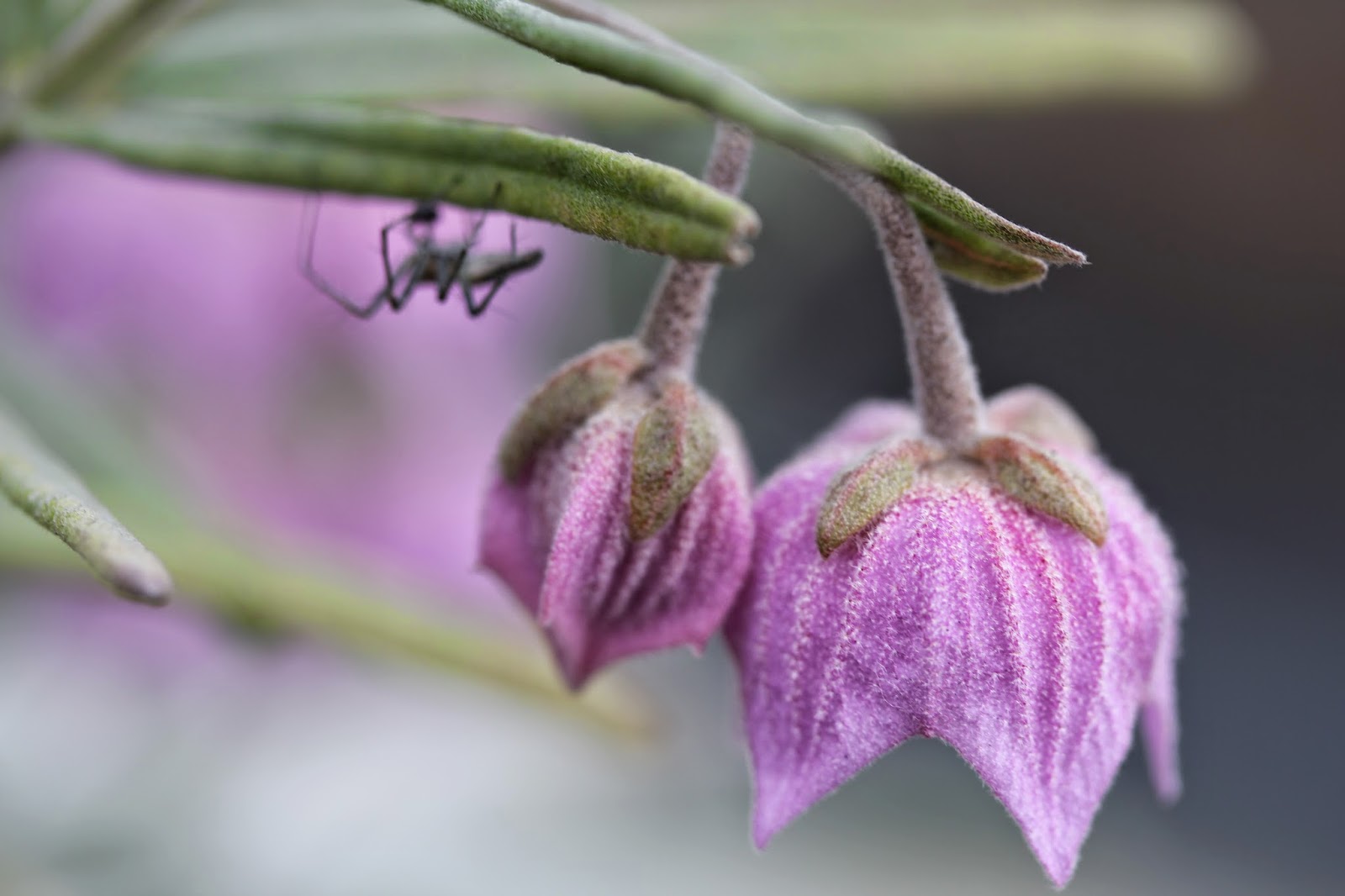
We visited the Hunter Region Botanic Gardens last December, and bought a few plants on the way out. A definite favourite was Guichenotia macrantha, with velvety purple ballgown-shapes flowers, and brown fuzzy seed capsules. This one has grown beautifully in the garden ever since, in a dry sunny part of the new native garden. It's now covered in these stunning flowers, and insects like this friendly spider are hanging about in it. What a winner!


Saturday, 19 April 2014

Photo of the week - Lady and the tramp


In amongst my vegetables, there are lots of little creatures going about their day. Just a little bit of patience is all it takes to get a glimpse into their busy world. My favourites to watch are the lady beetles, members of the family Coccinellidae. They are all rounded, most are yellow,orange or red, and have a number of spots on their wing-covers. In my garden, there are 2 common types: the small orange beetles with 2 large black blotches, and the larger yellowish beetles with many small spots.
 

Coccinella transversalis
 
"28-spotted Ladybeetle" Epilachna sumbana

The first is a friendly little fellow, and seems to hang about feasting on the occasional aphid or scale, or the mildew that grows on the leaves of my zucchini and squash. The second actually eats the leaves themselves. My simple rule of thumb for ladybeetles is: A few spots is good. Lots of spots is bad. If in doubt, I tend to think of Cruella DeVille. Even the babies don't look as friendly! See:


I'm sure in this case you can guess which is the unfriendly visitor just by looking, but if you were in your own garden, just have a look what they're doing. Beetles go through a number of larval stages so it's sometimes difficult to tell who is who, but the tell-tale scraping marks on the leaf are a good sign that this is a leaf-eating beetle.
 
The good news is that in general, they don't eat much. I don't spray the 'bad' insects at my place for fear of scaring off (or killing off) the good ones. If you have a healthy balance in your garden, a few nasty beetles aren't an issue and will only result in a few unsightly half-chewed leaves. Their populations can boom quickly if the weather is right, but birds generally catch up pretty quickly. I have a few larger shrubs and trees growing between the veg for insect hunters to gather in, and as they grow I'm seeing more birds all the time. As always, variety is the key!
 
 
And for those that are curious, my apple tree is still flowering away... sigh...

Friday, 4 October 2013

Nerd alert: Friends in the garden

Now that I do an extra 2 hours of travelling to work and back every day, I'm getting home after dark, which leaves me no time to do my usual garden scouting (watering, checking for pests and diseases, looking for new fruit/flowers, and seeing what's ready to eat). The upside of this is that I get up excited on the weekend to see the changes in the garden over the week. One Saturday this month I was picking the caterpillars off my Tuscan kale (as you do...) when I noticed that one looked a bit suspicious! He wasn't moving, had some yucky black spots on him, and was laying on a pile of yellow cushions. There was also a little black insect sitting nearby.

Apanteles glomerata adult and pupae

I'm quite familiar with these caterpillars, they are the larvae of the white cabbage butterfly (Pieris rapae) and they eat big holes in the leaves of brassicas. I've seen the butterflies flitting about my broccoli and kale, laying tiny little yellow eggs, and I've washed them off when cleaning the leaves to eat. So I know they are as small as a pinprick, not big and fluffy like these things.
I've also studied some entomology as part of my horticulture degree, enough to recognise the little black critter as a tiny wasp. They are closely related to ants, and have a similar body shape with 3 distinct segments.
After a bit of research, I've discovered the wasp is a parasite called Apanteles glomerata, who lays her eggs inside caterpillars. After hatching, the baby wasps eat their way out of the offending caterpillar, and spin little yellow cocoons. When they come out of the cocoons, they are fully developed wasps (albeit very small) who will find a mate, and then an unlucky caterpillar. Although it's a grisly way to feed your children, it's quite handy for me, as wasps like these control the numbers of caterpillars in my veggies so that there are more for me to eat.
For me, the moral of the story is this- not using pesticides in my garden means safety for the insects that are actually helping me out. I hope the wasps that come out of these cocoons hang around my garden and find every one of those pesky caterpillars! It's a beautiful system (in a disgusting way) and I'd hate to interfere.